
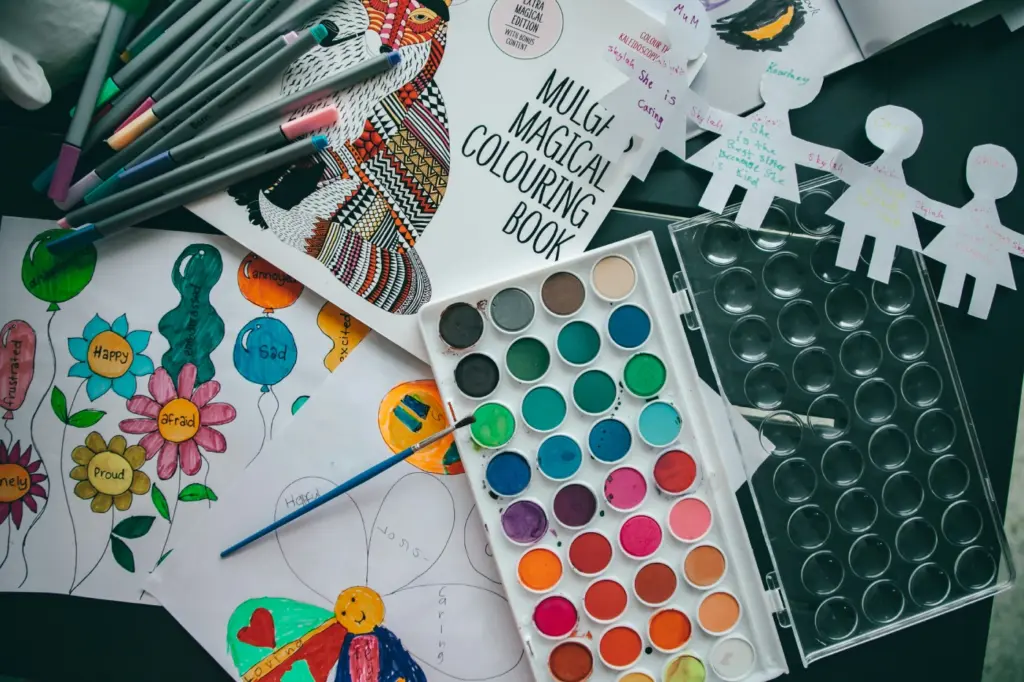
Play is the primary language of early childhood — the way young children make sense of the world, build relationships, develop their bodies, and stretch their minds. Indoor games, in particular, offer a rich and underappreciated opportunity for development: they’re accessible in any weather, easy to set up at home or in a classroom, and capable of targeting multiple developmental domains simultaneously.
The five games below are not just entertaining — each one has been chosen because of the specific developmental benefits it offers children between the ages of two and seven. Whether you’re a parent looking for rainy-day inspiration or an early childhood educator building a classroom activity repertoire, these games deliver genuine value alongside the fun.
How Play Supports Early Childhood Development
Before diving into specific games, it’s worth understanding the four key developmental domains that indoor play can support:
- Cognitive development — problem-solving, memory, attention, logical thinking, and early numeracy and literacy
- Physical development — fine motor skills (small movements of hands and fingers) and gross motor skills (larger movements involving the whole body)
- Social and emotional development — turn-taking, cooperation, emotional regulation, empathy, and communication
- Language development — vocabulary, listening, following instructions, and narrative thinking
The best indoor games touch more than one of these domains. That’s what separates genuinely developmental play from purely recreational activity — not the presence or absence of fun (both should be fun), but the breadth of what they build.
Early childhood educators at the montessori school design the indoor play environment deliberately, selecting games and materials that support all four developmental domains in an integrated, child-centred way.
Game 1: Memory Matching (Picture Card Game)
How to Play
Place pairs of picture cards face down on the floor or a table. Children take turns flipping two cards at a time, looking for a matching pair. When a match is found, the child keeps the pair. When all cards are matched, the game ends. For younger children, start with just five or six pairs and increase gradually.
What It Develops
- Working memory — children must hold the location of previously seen cards in mind while scanning for matches
- Concentration and focused attention — the game rewards sustained observation
- Turn-taking and patience — children learn to wait, watch, and manage disappointment when a turn doesn’t yield a match
- Visual discrimination — distinguishing between similar images builds the perceptual skills that underpin reading
Variations
- Use cards with letters or numbers to build early literacy and numeracy alongside memory
- Make homemade cards using stickers or drawn pictures — the making process adds an extra layer of engagement
- Play cooperatively rather than competitively with very young children — work together to find all the matches
Game 2: Obstacle Course (Indoor)
How to Play
Use cushions, rolled blankets, chairs, tape lines, hula hoops, and low stools to create a simple indoor obstacle course. Children crawl under tables, jump between cushions, balance along a tape line, and climb over soft obstacles. Add or remove elements based on the child’s age and ability. Let children help design new courses once they’re familiar with the concept.
What It Develops
- Gross motor skills — jumping, crawling, climbing, and balancing all build body awareness and physical confidence
- Sequencing and memory — completing a multi-step course in the right order builds working memory and planning skills
- Problem-solving — when an element doesn’t work as expected, children adapt and find solutions
- Confidence and risk tolerance — safely navigating physical challenges builds a sense of capability
At a quality best montessori schools in bangalore or early childhood setting, structured movement activities are a core part of the daily programme — not an optional add-on — because physical development and cognitive development are deeply intertwined in the early years.
Variations
- Add a cognitive element: place number cards at each station and ask children to do that many jumps or claps
- Introduce a ‘mission’ — the child is a secret agent who must complete the course to deliver an important message
- Time older children (with their permission) to build pace and motivation
Game 3: Block Building Challenges
How to Play
Provide a set of building blocks — wooden, foam, or even cardboard boxes — and give children a specific challenge: build the tallest tower that doesn’t fall, make a bridge between two chairs, create a house with a door and a roof, or build a structure that holds a small toy on top. Avoid demonstrating exactly how to do it — the problem-solving is the point.
What It Develops
- Spatial reasoning and early geometry — children learn about balance, symmetry, and structure through physical experience
- Engineering thinking — every collapsed tower is a data point about what works and what doesn’t
- Fine and gross motor coordination — placing blocks precisely builds hand-eye coordination
- Persistence and resilience — building challenges almost always involve failure before success
Variations
- Use LEGO or Duplo bricks for more precise, detailed building challenges
- Build collaboratively — two children working together on the same structure introduces negotiation and communication
- Photograph completed structures and create a ‘gallery’ that children can revisit and add to
Game 4: Simon Says
How to Play
One person takes the role of ‘Simon’ and gives instructions — ‘Simon says touch your nose,’ ‘Simon says hop on one foot.’ Children follow only when the instruction begins with ‘Simon says.’ If a child follows an instruction that doesn’t include ‘Simon says,’ they are out — or in a non-elimination version, they simply take a turn as Simon next. For very young children, play without eliminations and focus on listening and movement.
What It Develops
- Listening and auditory attention — children must listen carefully to each instruction in full before acting
- Inhibitory control — resisting the impulse to move when the cue is absent is an early executive function skill
- Body awareness — following movement instructions builds proprioception and kinesthetic awareness
- Language comprehension — processing and following verbal instructions is a foundational literacy skill
Inhibitory control — the ability to stop an automatic response when the situation requires it — is one of the strongest predictors of academic readiness. Simon Says builds it naturally, through play.
Developmental research that informs programmes at the best kindergarten schools in bangalore and other quality early learning environments consistently shows that games involving listening, following instructions, and impulse control are among the most cognitively valuable games available to young children.
Variations
- Incorporate learning content: ‘Simon says point to something red,’ ‘Simon says show me a number 5’
- Let children take turns as Simon — giving instructions builds language skills as much as following them does
- Play in different languages to support multilingual development
Game 5: Sorting and Classifying Games
How to Play
Gather a collection of everyday objects — buttons, building blocks, toy animals, kitchen items, leaves, pebbles, or socks. Ask children to sort them into groups. Start with one clear rule (sort by colour), then introduce two rules (sort by colour and size), then let children invent their own sorting rules. The game can be as simple or complex as the child’s age and ability allow.
What It Develops
- Early mathematical thinking — classification, grouping, and set formation are foundational to numeracy
- Logical reasoning — children build and test hypotheses about categories (‘these all have spots’, ‘these are all round’)
- Fine motor skills — handling and arranging small objects builds the finger dexterity needed for writing
- Language development — naming properties, explaining sorting rules, and describing objects builds vocabulary significantly
Variations
- Sort by increasingly abstract properties — texture, weight, or whether something is natural or man-made
- Create a mystery sort: arrange objects into groups without explaining the rule and ask the child to guess it
- Use sorting as a tidy-up game — sorting toys back into categories at the end of play turns tidying into a learning activity
Parents choosing the best preschools in bangalore or any quality early learning environment for their child will find that activities like sorting, classification, and pattern recognition are embedded throughout the programme — because these simple games build the mathematical foundations that children draw on throughout their education.
Choosing the Right Game for Your Child’s Stage
Age | Best Game Choices | Focus Area |
|---|---|---|
2–3 years | Sorting games, simple obstacle course, Simon Says (no elimination) | Gross motor, early language, sensory exploration |
3–4 years | Memory matching (6–8 pairs), block challenges, sorting with two rules | Memory, fine motor, early logical thinking |
4–5 years | Memory matching (10+ pairs), obstacle course design, block challenges with goals | Working memory, spatial reasoning, problem-solving |
5–7 years | All five games with increased complexity; child leads rules and variations | Executive function, collaboration, strategic thinking |
Key Takeaways
- Indoor games can simultaneously develop cognitive, physical, social, and language skills — making them one of the most efficient learning tools available to parents and educators
- Memory matching builds working memory and visual discrimination; obstacle courses build gross motor skills and sequencing
- Block building develops spatial reasoning and resilience; Simon Says builds inhibitory control and listening
- Sorting games lay early mathematical foundations through classification, logical reasoning, and vocabulary
- Adjust complexity to the child’s developmental stage — challenge is important, but so is the experience of success
Conclusion
The five indoor games in this guide share a common quality: they are simple to set up, genuinely enjoyable, and developmentally rich. None of them requires expensive equipment or specialist knowledge. What they do require is time, engagement, and the willingness to follow the child’s lead when their version of the game starts to diverge from the instructions. That divergence is usually where the best learning happens. Give children the materials, set a light challenge, and step back far enough to let them surprise you.
FAQs
- What are the best indoor games for toddlers?
For toddlers (2–3 years), the best indoor games are sensory-rich and physically active: simple sorting, cushion-jumping obstacle courses, and Simon Says without elimination work well. Keep rules minimal and sessions short — 10 to 15 minutes is often enough at this age.
- How do indoor games support school readiness?
Games like Simon Says, memory matching, and sorting directly build the executive function skills — attention, working memory, and inhibitory control — that teachers identify as the strongest predictors of school readiness. Physical games also build the body awareness and coordination that children need to sit, focus, and hold a pencil.
- Can indoor games replace outdoor play?
No — outdoor play offers experiences (scale, natural elements, uneven terrain, sunlight) that indoor play can’t replicate. Indoor games are a valuable supplement, particularly on days when outdoor play isn’t possible. Both are important.
- How can I keep a child engaged in a game if they lose interest quickly?
Shorten the session, adjust the difficulty, or hand the child a leadership role (let them be Simon, let them set the sorting rule, let them design the obstacle course). Children engage more deeply when they have agency within the activity.
- Are competitive games appropriate for young children?
Mild, low-stakes competition can be healthy from around age 5, when children begin to understand rules and manage disappointment more capably. For children under 5, cooperative versions of games — where everyone works toward the same goal — are generally more developmentally appropriate and enjoyable.
- How many indoor games should I rotate between?
Three to five familiar games, rotated regularly, is a good range. Familiar games allow children to go deeper — developing skill, creativity, and their own variations — which is more valuable than constant novelty.
- Can these games be played in a group childcare or preschool setting?
Yes. All five games can be adapted for small groups (3–8 children), and several — like the obstacle course, Simon Says, and the collaborative block challenge — are actually enhanced by a group setting because they introduce social dynamics like turn-taking, negotiation, and cooperative problem-solving.
- Do I need to buy special materials for these games?
No. Memory cards can be made from paper and stickers. Obstacle courses use household furniture and cushions. Block challenges use any stackable household items. Sorting games use buttons, socks, or toys already in the home. The developmental value comes from how materials are used, not their cost.