
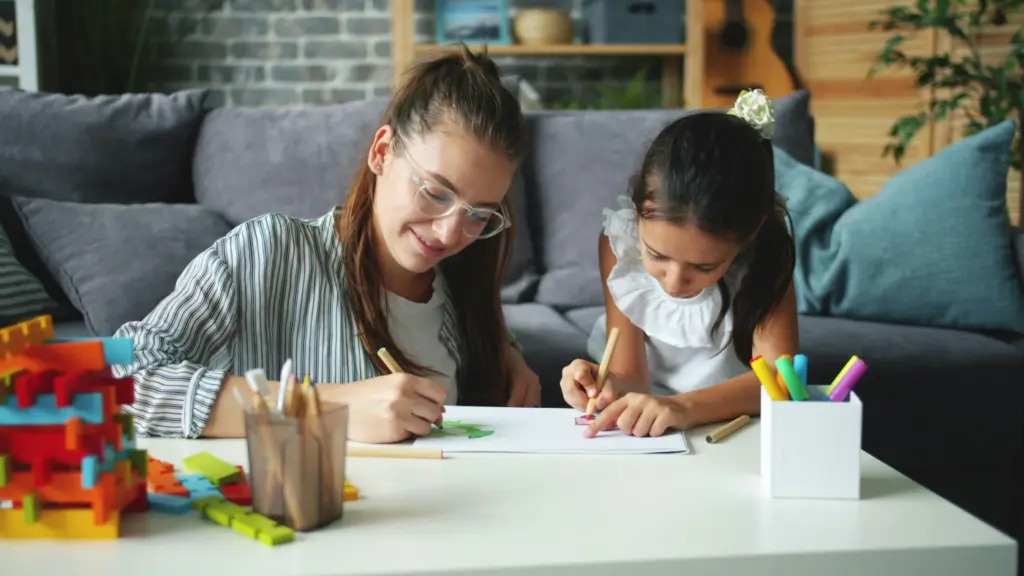
Young children don’t need elaborate toys or planned outings to learn and thrive — they need time, space, and a little guidance to explore the world through play. Creative activities at home serve multiple purposes at once: they keep children engaged, develop fine motor skills, nurture imagination, and create the kind of unhurried, hands-on learning that no screen can replicate.
The ten activities below are designed to be simple, low-cost, and genuinely enjoyable for children between the ages of two and eight. Most require nothing more than everyday household materials — and every one of them offers real developmental value alongside the fun.
Why Creative Play Matters in Early Childhood
Play is not a break from learning for young children — it is how they learn. Through creative activities, children develop language as they describe what they’re making, build mathematical thinking as they sort and count, strengthen their fine motor skills through cutting, drawing, and moulding, and practise emotional expression through storytelling and role play.
Research in early childhood development consistently shows that unstructured creative play produces stronger cognitive, emotional, and social outcomes than passive entertainment. The activities below are structured just enough to give children a starting point — but open-ended enough for their own ideas to take over.
Early childhood educators at the best preschools in bangalore emphasise that the activities children engage in at home during their earliest years are just as developmentally significant as anything that happens in the classroom — and parents are their child’s first and most important teachers.
Activity 1: Playdough From Scratch
Making playdough together is as much fun as playing with it. A simple, safe recipe uses flour, salt, water, oil, and food colouring — all kitchen staples. The kneading and mixing process itself builds hand strength and coordination, and the resulting dough keeps children occupied through sculpting, rolling, cutting, and imaginative play for hours.
What It Develops
- Fine motor skills and hand strength through kneading, rolling, and shaping
- Early maths concepts — children naturally sort, measure, and compare as they play
- Creativity and imagination through open-ended sculpting
- Early science concepts — observing how ingredients combine and change
Activity 2: Cardboard Box Creations
An empty cardboard box is one of the most versatile creative materials available — and one of the least appreciated. Depending on the size, a cardboard box can become a car, a house, a rocket, a puppet theatre, or a city block. Provide child-safe scissors, tape, markers, and whatever scraps are around — fabric, bottle caps, string — and let the child direct the project.
Cardboard construction develops spatial reasoning, problem-solving, and persistence. Children who encounter a structural challenge (a roof that keeps falling, a window that won’t stay open) are practising engineering thinking without any formal instruction.
Activity 3: Nature Art
A short walk outdoors — even just around the garden or a nearby park — becomes a creative activity when children collect leaves, petals, pebbles, twigs, and seed pods with a purpose in mind. Back at the table, these natural materials can be arranged into pictures, pressed into playdough to create prints, used to make collages on paper, or sorted by colour, size, and shape.
Educators at the best montessori schools in bangalore and similar early learning environments frequently use natural materials in art and sensory activities because they connect children to the physical world, support scientific observation skills, and provide textures and forms that manufactured materials can’t replicate.
Activity 4: Storytelling With Puppets
Making simple puppets from old socks, paper bags, or cardboard tubes takes about ten minutes — and the storytelling that follows can go on indefinitely. Children naturally narrate, improvise, and give voice to characters, which builds language fluency, vocabulary, and narrative thinking in a deeply enjoyable way.
Parents who participate in the puppet play — taking on a character, asking questions within the story, reacting to what the child’s puppet does — amplify the language benefit considerably. Follow the child’s lead and resist the urge to correct or redirect the story.
Activity 5: Sensory Bins
A sensory bin is simply a container filled with a tactile base material — dry rice, dried lentils, sand, water, or shredded paper — with small objects hidden or placed inside for children to explore. Adding scoops, cups, funnels, and small toys turns it into an extended activity that children can return to repeatedly.
Sensory play is particularly valuable for toddlers and preschoolers, whose learning is intensely physical. Exploring different textures, temperatures, and materials builds sensory processing skills and supports the kind of focused, calm attention that is a precursor to more structured learning.
Activity 6: Simple Baking Together
Baking with a young child takes more time and makes more mess than baking alone — and it’s worth every extra minute. Children who help measure ingredients, pour, stir, and watch dough rise or biscuits brown are engaging with maths (measuring, counting), science (cause and effect, heat and change), and literacy (following a recipe, reading instructions) simultaneously.
Keep it simple — banana bread, biscuits, or decorated rice cakes require minimal equipment and produce something children can feel genuinely proud of. The cleanup becomes part of the activity, not an aftermath.
Activity 7: Drawing to Music
Put on a piece of music — something with a clear mood or tempo — and invite the child to draw or paint whatever the music makes them think of or feel. There are no instructions beyond that. This activity produces strikingly different results depending on the music chosen, and children often surprise parents with the sophistication of their emotional responses.
- Calm, slow music tends to produce careful, detailed drawings
- Fast, energetic music produces bold, sweeping marks
- Unusual or unfamiliar music sparks the most imaginative imagery
This activity builds emotional vocabulary, creative confidence, and the ability to translate feeling into expression — all foundational to arts education and emotional intelligence.
At a quality kindergarten schools, music and movement are integrated into the daily curriculum from the very earliest ages because the connection between sound, emotion, and creative expression is one of the richest areas of early childhood development.
Activity 8: Building With Everyday Objects
Before purchasing a dedicated building set, consider what’s already available: wooden blocks, empty toilet rolls, cereal boxes, yoghurt pots, bottle caps, and books all work beautifully as building materials. Challenge children to build the tallest tower, a bridge that holds a toy, or a house for a stuffed animal.
Building activities develop spatial reasoning, early engineering thinking, and — crucially — resilience. Structures fall. That’s the point. Children who keep rebuilding after a collapse are practising persistence and problem-solving in one of the most natural contexts possible.
Activity 9: Homemade Obstacle Course
A simple indoor obstacle course requires no equipment beyond household items: cushions to jump between, a line of tape to balance along, a tunnel made from chairs and a blanket, a hoop to throw a soft ball through. Children who design the course themselves (with parental help where needed) develop planning skills alongside the physical ones.
Physical activity is deeply connected to cognitive development in early childhood. Movement builds the brain pathways that support attention, coordination, and later academic skills. An obstacle course combines gross motor development with sequencing, memory, and problem-solving — all while children are entirely focused on having fun.
Activity 10: Family Scrapbook or Memory Jar
Invite the child to help create a scrapbook page about a recent family outing, a favourite day, or a special event — using photos, drawings, ticket stubs, leaves, and whatever else connects to the memory. Alternatively, a memory jar (a glass jar where folded notes about good moments are collected throughout the year) is a beautiful, ongoing project that builds literacy and emotional awareness together.
A montessori school or quality early learning environment encourages parents to bring home-based creative activities like scrapbooking and memory projects into family life because they reinforce the curriculum’s emphasis on personal narrative, emotional literacy, and connection between home and school learning.
Tips for Making Creative Activities Work at Home
Common Challenge | Simple Solution |
|---|---|
Child loses interest quickly | Follow their lead — when interest fades, the activity is done. Short sessions are fine. |
Activity makes too much mess | Lay down an old sheet or take the activity outside. Embrace the mess as part of the learning. |
Child only wants screen time | Establish a consistent creative time daily — routine reduces resistance over time. |
Parent doesn’t know how to start | Set out the materials and sit nearby. Children often begin once they see supplies available. |
Siblings want to do different things | Give each child their own materials and a shared ‘show and tell’ at the end. |
Key Takeaways
- Creative activities at home build fine motor skills, language, imagination, and emotional intelligence simultaneously
- The best activities are open-ended — they have a starting point but no fixed outcome, leaving room for the child’s own ideas
- Everyday household materials are often more versatile than dedicated toys for creative play
- Parent participation — even sitting nearby — significantly amplifies the developmental benefit of creative activities
- Short, consistent daily creative time produces better outcomes than occasional long sessions
Conclusion
The most valuable creative activities are not the most elaborate ones — they’re the ones that happen regularly, with materials close at hand and a parent nearby. Every scrap of cardboard, every pot of playdough, every rainy afternoon spent building and drawing and imagining is an investment in a child’s development that pays off in ways that continue long after the mess is cleared up. Start with one activity from this list this week, and build from there.
FAQs
- What age are these creative activities suitable for?
Most activities in this list are suitable for children between 2 and 8 years, with simple adjustments for different ages. Younger children may need more parental involvement; older children can take on more independence and complexity.
- How long should a creative activity session last?
Follow the child’s lead. Toddlers may engage for 10–15 minutes; older preschoolers and school-age children can often sustain creative play for 30–45 minutes or more. There is no minimum — even a short session has value.
- Do I need to buy special materials for these activities?
No. Almost every activity on this list uses everyday household items — paper, cardboard boxes, kitchen ingredients, natural materials, and fabric scraps. The emphasis is on creative use of what’s already available.
- How can I encourage a child who says ‘I can’t draw’ or ‘I’m not creative’?
Focus on process over product. Say ‘show me what you’re making’ rather than ‘that’s beautiful.’ Avoid correcting or improving the child’s work. Display what they create, however rough, to communicate that their efforts have value.
- Is screen time ever acceptable during creative activities?
For reference or inspiration — looking up a recipe together, or watching a short video on how to fold origami — screens can support creative activities. Passive consumption during creative time, however, competes with and diminishes it.
- How do creative activities at home connect to preschool learning?
The skills built through home creative play — fine motor control, language, problem-solving, emotional expression, and curiosity — directly align with and reinforce what quality early childhood programmes develop in the classroom.
- What if my child is more interested in physical play than creative activities?
Physical play is also creative play. The obstacle course, the building challenge, and the nature walk all involve physical movement alongside creativity. Start with activities that combine both and introduce calmer, table-based activities gradually.
- How often should children do creative activities at home?
Daily creative time — even 15–20 minutes — is ideal. Consistency matters more than duration. Making it a predictable part of the day reduces resistance and builds the habit of creative engagement.