
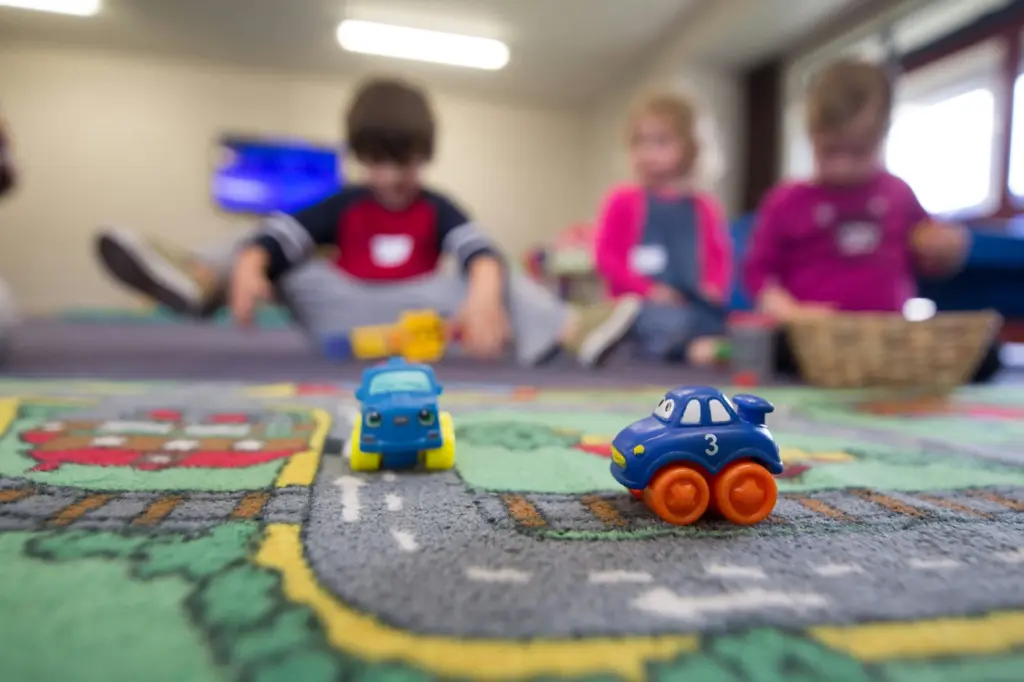
Children’s Day — celebrated on 14th November across India in honour of Pandit Jawaharlal Nehru’s birthday — is one of the most eagerly anticipated days in the school calendar. For early childhood educators and school coordinators, it’s an opportunity to step away from routine, celebrate every child’s individuality, and create shared memories that children carry with them long after the day is over.
The best Children’s Day activities are not just entertaining — they’re genuinely meaningful, inclusive, and developmentally appropriate. Here are five creative ideas that work beautifully across preschool and early primary settings, combining fun with learning in a way that young children respond to naturally.
Why Children’s Day Deserves Thoughtful Planning
It’s easy to treat Children’s Day as an occasion for games and sweets — and there’s nothing wrong with that. But a well-planned Children’s Day also provides an opportunity for children to feel genuinely seen and celebrated as individuals, to express themselves creatively, and to participate in experiences that aren’t possible in a standard school day.
The most memorable Children’s Day celebrations are those that put children at the centre — not as an audience, but as active participants who contribute, create, and lead.
Educators at the best kindergarten schools in bangalore plan Children’s Day around activities that honour every child’s unique personality and learning style — because celebration, done well, is also a form of education.
Idea 1: A ‘When I Grow Up’ Dress-Up and Showcase
What It Involves
Children come to school dressed as the profession they dream of — a doctor, a chef, an astronaut, an artist, a cricketer, a teacher. Each child prepares a short sentence or two about why they chose that dream. In class, children share their choices with each other; older classes can present to younger ones in a ‘dream careers parade.’
Why It Works
This activity celebrates imagination and aspiration without ranking or comparing. Every child’s dream is taken seriously. The costume element adds excitement and a sense of occasion, while the sharing component builds confidence in public speaking and listening — both key early literacy skills.
Preparation Tips
- Send a note home two weeks in advance so parents have time to prepare simple costumes (a stethoscope made of string, a chef’s paper hat)
- Encourage creative and non-traditional career choices — don’t steer children toward ‘expected’ answers
- Create a display board with photos and children’s dream descriptions that stays up for the week following Children’s Day
At kindergarten schools and other early childhood settings, activities that invite children to imagine their future self build a powerful sense of agency and self-belief — qualities that research links to stronger academic motivation in later years.
Idea 2: A Collaborative Mural — ‘Our World’
What It Involves
Roll out a long sheet of craft paper along a wall or across the floor. Give children paint, crayons, and collage materials, and invite them to contribute whatever they like to a shared artwork titled ‘Our World’ — their family, their home, their favourite things, their dreams for the planet. Every child contributes to the same canvas.
Why It Works
A collaborative mural builds community and belonging — children can see their contribution as part of something larger than themselves. It also produces a genuinely beautiful result that can be displayed in the school corridor or entrance for the rest of the term, serving as a daily reminder of the class’s collective creativity.
Preparation Tips
- Divide the paper into loose sections so younger children have their own space without feeling overwhelmed by the whole canvas
- Provide prompts for children who need a starting point: ‘What does your home look like?’ or ‘What animal do you love?’
- Photograph each child’s contribution individually so you can share individual photos with families
Idea 3: A Storytelling Festival
What It Involves
Set up storytelling corners around the classroom or school — a cosy rug with cushions, a small stage area, a puppet theatre. Teachers and older students take turns telling stories; younger children can contribute their own. Families can be invited to share a short story from their culture or language.
Why It Works
Storytelling is one of the oldest and most powerful educational tools available. It builds listening skills, vocabulary, comprehension, narrative thinking, and cultural awareness — all simultaneously. A storytelling festival also honours linguistic and cultural diversity in a school community, which is particularly valuable in a city as culturally rich as Bangalore.
Preparation Tips
- Select a mix of traditional Indian stories, international fairy tales, and original stories created by teachers or older students
- Use props, puppets, and sound effects to bring stories alive for very young listeners
- Invite children to illustrate their favourite moment from a story they heard — these drawings make a wonderful display
Parents searching for the best preschools in bangalore often prioritise schools where language, storytelling, and cultural richness are embedded in everyday practice — not just reserved for special occasions.
Idea 4: The Kindness Chain
What It Involves
Each child receives a strip of coloured paper. On it, they write or draw (with teacher help for younger children) one kind thing they will do for a friend, a family member, or their school. The strips are linked together into a paper chain that is hung across the classroom or corridor. By the end of the day, every class has contributed links, and the chain grows to reflect the entire school community.
Why It Works
Children’s Day is not just a celebration of childhood — it’s a reminder of the kind of world children deserve to grow up in. The Kindness Chain grounds the celebration in values, giving it depth beyond the festivity. It also provides a concrete, visible expression of the school’s community spirit that children can point to and feel part of.
Preparation Tips
- Pre-cut the paper strips and have them ready with crayons at each table
- Read a short picture book about kindness or friendship before starting the activity to set the tone
- Photograph the completed chain and share with families — it becomes a meaningful visual representation of the class’s values
Idea 5: A Child-Led ‘Mini Olympics’ of Fun Games
What It Involves
Organise a series of simple, non-competitive games in the school garden or hall — sack races, spoon-and-ball relays, musical statues, hula hoop challenges, and parachute games. The key distinction: there are no winners and losers. Every child who participates earns a participation ribbon or stamp, and the emphasis is on effort, laughter, and inclusion.
Why It Works
Physical play on Children’s Day sends an important message: movement, joy, and togetherness are valued here. Non-competitive games are particularly well-suited to early childhood settings because they remove anxiety, encourage risk-taking, and ensure every child — regardless of athletic ability — feels celebrated rather than evaluated.
Preparation Tips
- Involve older children or student council members in organising and running the game stations
- Ensure every game is genuinely accessible to children of different physical abilities
- End with a whole-school gathering — a shared snack, a song, or a brief reflection — to close the day with a sense of community
The emphasis on inclusive, joyful, non-competitive play that characterises Children’s Day at the best montessori schools near me reflects a broader educational philosophy: that every child deserves to feel celebrated, capable, and connected to their school community.
Planning Principles for a Memorable Children’s Day
Principle | What It Looks Like in Practice |
|---|---|
Child-centred | Activities that children contribute to and shape, not just receive |
Inclusive | Every child can participate fully, regardless of ability, language, or background |
Memorable | At least one activity that produces something tangible children can take home or see displayed |
Values-led | Activities that connect celebration to kindness, community, and imagination |
Low-pressure | No competition, no performance anxiety — the day is about joy, not assessment |
Key Takeaways
- The best Children’s Day activities are inclusive, child-led, and produce something tangible or meaningful
- Dream careers dress-up, collaborative murals, and storytelling festivals all celebrate individuality and community simultaneously
- The Kindness Chain grounds the celebration in values — giving the day depth alongside the festivity
- Non-competitive physical games ensure every child feels celebrated rather than evaluated
- Good planning starts two to three weeks in advance — particularly for activities involving families
Conclusion
Children’s Day is one of those rare occasions when the school calendar slows down enough to simply celebrate the children in it. The activities above — each designed to be joyful, inclusive, and genuinely meaningful — give educators and coordinators a starting point for a day that children will talk about at home for days afterwards. Plan with care, follow the children’s energy, and let the celebration be as much about who they are today as who they might become.
FAQs
- When is Children’s Day celebrated in India?
Children’s Day is celebrated on 14th November every year in India, marking the birthday of India’s first Prime Minister, Pandit Jawaharlal Nehru, who was known for his love of children.
- What are good Children’s Day activities for preschoolers?
For very young children, the best activities are sensory, physical, and creative — finger painting, puppet storytelling, parachute games, and simple dress-up activities all work beautifully for preschool-age children.
- How long should Children’s Day activities run?
For preschool and early primary children, activities work best in 20–30 minute blocks with transition time between them. A structured morning of two or three activities followed by free play and a shared celebration is an effective format.
- How can we involve families in Children’s Day celebrations?
Families can be invited to contribute to a storytelling festival, help with costumes for the dream careers activity, or join a brief end-of-day celebration. Even a short display of children’s artwork that parents can view during pickup creates a meaningful connection.
- How do we make Children’s Day inclusive for children with different abilities?
Choose activities that offer multiple ways to participate — children who can’t write can draw, children who find physical games challenging can take a supporting role, and multilingual activities ensure no child is excluded by language.
- What should teachers do differently on Children’s Day?
Step back from the role of instructor and step into the role of facilitator and celebrant. Follow children’s energy, allow for more choice and spontaneity than a normal school day, and make sure every child has at least one moment of being genuinely noticed and appreciated.
- Can Children’s Day activities connect to the curriculum?
Absolutely. Storytelling builds literacy, the collaborative mural builds art and social skills, and the dream careers activity builds personal and social development. None of these activities require abandoning learning — they just deliver it joyfully.
- How do we avoid Children’s Day becoming just another ‘sweet and games’ day?
Build at least one activity that produces something meaningful — a mural, a kindness chain, a story collection — that lasts beyond the day itself. When children can point to something they made or contributed to, the celebration has lasting value.