
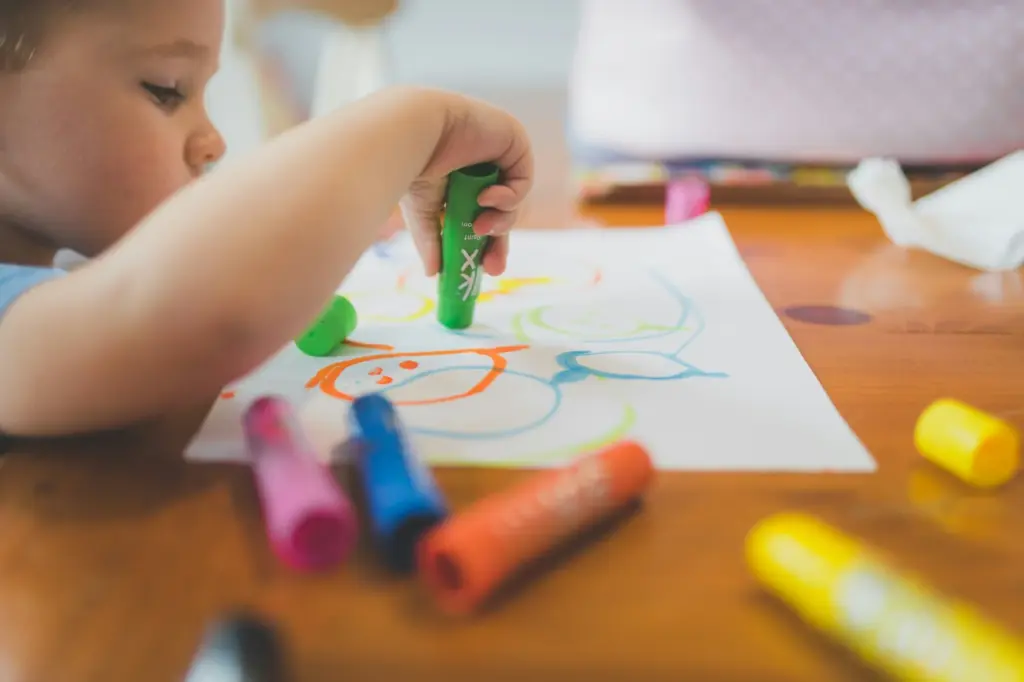
There is something genuinely special about watching a child focus on making something with their own hands. Crafting builds patience, sharpens fine motor skills, and gives children a sense of pride that is hard to replicate through any screen-based activity. The best part is that most craft supplies are already sitting in kitchen drawers and recycling bins — no specialist art store required.
These ten crafts for kids are designed to be easy enough for young children to complete with minimal help, yet interesting enough to hold their attention from start to finish. Each one develops a different skill alongside the fun, making them worthwhile beyond just keeping busy on a rainy afternoon.
1. Paper Plate Animals
Paper plates are one of the most versatile craft materials available. Children can transform them into any animal by adding cut paper ears, googly eyes, and paint or markers. A lion, a cat, a frog, or even a butterfly can emerge from a single plate in under 30 minutes.
This activity encourages children to plan before they create — deciding which animal, what colours, and which features to include. That small act of pre-planning is an early form of design thinking, and it matters more than most parents realise.
2. Handprint Canvas Art
Pour a small amount of washable paint onto a tray, press a child’s hand into it, and stamp it onto a canvas or thick paper. Repeat with different colours and orientations to create butterflies, trees, flowers, or abstract patterns.
Handprint art is particularly meaningful as a keepsake. Children love seeing how their handprints grow year to year, and these pieces make beautiful gifts for grandparents. The craft is suitable for toddlers upwards and takes as little as fifteen minutes to complete.
3. Toilet Roll Binoculars
Tape or glue two empty toilet rolls side by side, decorate them with paint, stickers, or washi tape, and attach a string to wear around the neck. In minutes, a child has a pair of ‘binoculars’ for an outdoor adventure or imaginative play.
This craft is a gateway activity for nature walks and outdoor exploration. Once the binoculars are made, encourage children to head outside and spot birds, insects, or cloud shapes. The craft and the activity that follows it together support observational skills and a love of the natural world.
4. Salt Dough Ornaments
Mix one cup of plain flour, half a cup of salt, and half a cup of water to make a simple salt dough. Roll it out, use cookie cutters or hands to shape it, poke a hole at the top with a straw, and bake at a low temperature until firm. Once cooled, paint and decorate as desired.
Salt dough is tactile and forgiving — children can squish, reshape, and start over without frustration. The final product can be painted, varnished, and hung as decoration, giving children a lasting reminder of something they made themselves.
5. Paper Bag Puppets
A brown paper lunch bag becomes a puppet in minutes. The fold at the bottom of the bag forms the mouth, and children simply draw or stick on eyes, teeth, hair, and any features they choose. From there, a puppet show is never far behind.
Puppet-making supports language development in a natural, playful way. Children invent characters, dialogue, and stories for their puppets — skills that early childhood educators at nursery schools in bangalore actively build through dramatic play and storytelling activities.
6. Leaf Print Art
Collect leaves of different shapes and sizes from the garden or a nearby park. Brush paint directly onto the underside of each leaf where the veins are most prominent, then press it firmly onto paper to create a print. Lift the leaf carefully to reveal the pattern.
The results are always beautiful and always unique, making this one of the most satisfying crafts for kids. Beyond the art, children learn to observe the structure of leaves closely — a small but meaningful lesson in botanical curiosity.
7. DIY Bookmarks
Cut thick paper or cardstock into bookmark-sized strips. Children can decorate them with drawings, stickers, washi tape, or pressed flowers. Laminating them at home (using self-adhesive laminating sheets) gives them a professional finish and makes them durable enough to use every day.
Bookmark-making is a craft that connects directly to reading, and pairing the two activities makes a natural afternoon project. Many top play schools in bangalore use similar craft-literacy pairings to build positive associations with books from a very young age.
8. Sock Puppets
An old sock, a few buttons, some wool, and a bit of glue are all it takes to create a puppet with personality. The buttons form eyes, the wool becomes hair, and scraps of fabric can be added as clothing or accessories.
Sock puppets have been delighting children for generations because the format is so open-ended. No two children ever make the same puppet, which means creativity drives every decision from start to finish. This is exactly the kind of open-ended making that child development specialists consistently recommend.
9. Painted Rock Paperweights
Collect smooth, clean rocks from the garden or a riverbed. Paint them with acrylic paint in any design — a ladybird, a rainbow, a face, an abstract pattern, or a simple message. Seal with a clear varnish once dry to make them weather-resistant and glossy.
Rock painting has become a community activity in many neighbourhoods, with children hiding painted rocks in parks for others to find. This adds a social dimension to what begins as a home craft, teaching children that their creativity can bring joy to strangers too.
10. Cardboard Box City
Save cereal boxes, tissue boxes, and any other small cardboard packaging. Children can arrange, stack, cut, and decorate them to build a miniature city, a space station, or any imaginary world they choose. Add toy cars, Lego figures, or small animals to bring the scene to life.
This is one of those crafts for kids that can expand across an entire afternoon or even a whole weekend. The scale, the complexity, and the narrative all grow as children invest more time. It is the kind of sustained, imaginative project that the best preschools in bangalore encourage alongside structured learning, because it develops planning, persistence, and spatial reasoning simultaneously.
Quick Reference: Crafts by Age and Skill
Craft | Suitable Age | Key Skill Developed | Time Needed |
Paper Plate Animals | 3 – 8 | Planning and design | 20 – 30 min |
Handprint Canvas Art | 2 – 7 | Sensory exploration | 15 – 20 min |
Toilet Roll Binoculars | 3 – 8 | Imaginative play | 15 – 20 min |
Salt Dough Ornaments | 4 – 10 | Tactile creativity | 1 – 2 hrs (incl. baking) |
Paper Bag Puppets | 3 – 9 | Language and storytelling | 20 – 30 min |
Leaf Print Art | 3 – 10 | Nature observation | 20 – 30 min |
DIY Bookmarks | 5 – 12 | Literacy connection | 20 – 30 min |
Sock Puppets | 4 – 10 | Open-ended creativity | 30 – 45 min |
Painted Rock Paperweights | 5 – 12 | Fine motor precision | 30 – 45 min |
Cardboard Box City | 4 – 12 | Spatial reasoning and planning | 1 – 3 hrs |
Key Takeaways
- All ten crafts use materials that are inexpensive, readily available, and largely already at home.
- Each craft develops a specific skill — from fine motor control and language to observation and spatial reasoning.
- Open-ended crafts like the cardboard city and sock puppets support creativity more than step-by-step instruction kits.
- Crafting regularly at home complements structured early learning and builds concentration, patience, and pride in one’s own work.
- Pairing a craft with a related activity (leaf prints with a nature walk, bookmarks with reading time) extends the learning naturally.
Conclusion
Crafts for kids are never just about the finished product. Every torn piece of paper, every painted handprint, and every glued-on googly eye is a small act of problem-solving, patience, and self-expression. Making things at home — with a parent nearby but not directing every move — gives children confidence in their own abilities that carries into every other area of learning. Keep the materials accessible, keep the expectations flexible, and let the making lead the way.
FAQs
1. What age are these crafts for kids suitable for?
Most crafts in this list work well for children between the ages of 3 and 12. Activities like handprint art can be adapted for toddlers as young as 2, while bookmarks and painted rocks are enjoyable for children up to 12 and beyond.
2. What basic supplies should I keep at home for kids’ crafts?
The most useful craft basics are washable paint, plain paper, cardstock, glue sticks, child-safe scissors, markers, googly eyes, washi tape, and a collection of clean recyclable packaging such as toilet rolls and cardboard boxes.
3. How do I encourage a child who says they are not creative?
Start with a highly structured craft like the toilet roll binoculars where the steps are clear and the outcome is predictable. As confidence grows, gradually introduce more open-ended activities. Avoid correcting or improving their work — the process matters far more than the product at this stage.
4. How can I make craft time less messy?
Lay down an old tablecloth or a large piece of cardboard as a work surface. Use washable paints wherever possible, dress children in an old T-shirt or apron, and keep a damp cloth nearby. Accepting a small amount of mess actually reduces anxiety for both parent and child.
5. Can these crafts be done in a group or classroom setting?
Yes. All ten crafts scale well for groups. Paper plate animals, leaf prints, and painted rocks work particularly well in classroom settings because each child’s outcome is unique and the materials are easy to prepare in bulk.
6. How do crafts support child development?
Crafts build fine motor skills, hand-eye coordination, concentration, creativity, and self-confidence. Activities that involve planning — like the cardboard box city — also develop early executive function skills such as goal-setting and sequential thinking.
7. Are store-bought craft kits better than making crafts from scratch?
Not necessarily. Pre-packaged kits offer convenience but often limit creativity because all the decisions have been made in advance. Making crafts from everyday materials encourages children to problem-solve and make genuine creative choices, which is developmentally more valuable.
8. How often should children do crafts at home?
There is no fixed rule, but even one craft session per week makes a meaningful difference over time. Regular short sessions build habits of making and create a positive association with creativity that tends to carry through into school life.