
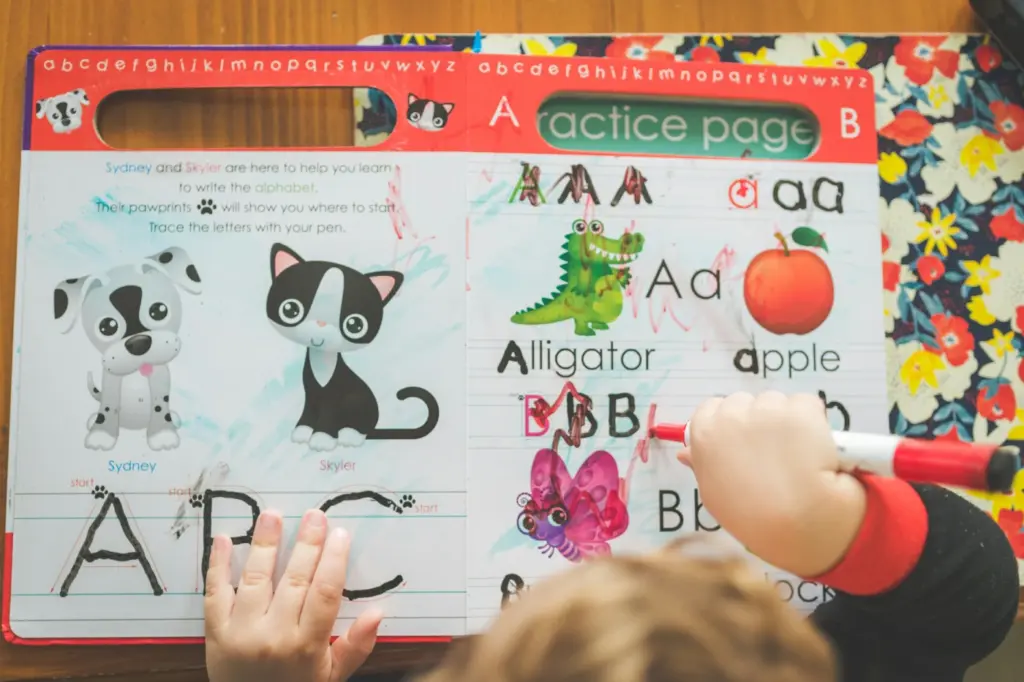
Words are the building blocks of every thought a child will ever express. A child who has been exposed to a rich vocabulary from an early age arrives at school with an enormous advantage — not just in language lessons, but across every subject that requires reading, reasoning, and communication. The gap between children with strong vocabulary foundations and those without tends to widen rather than narrow over the years of schooling, which makes the early years the most important window for deliberate vocabulary development.
This article explores why vocabulary words for kids deserve focused attention, how vocabulary acquisition happens naturally and intentionally, and what parents and educators can do to ensure every child builds the word bank they need to think, express, and succeed. Research consistently shows that the volume and variety of language a child hears before age five shapes their academic trajectory in ways that persist well into secondary school, a finding that informs how the top nursery schools in bangalore approach language-rich environments from the very first term.
What Is Vocabulary and Why Does It Matter for Young Children?
Vocabulary refers to the total set of words a person knows and uses. For children, vocabulary development happens on two tracks simultaneously: receptive vocabulary (words they can understand when heard or read) and expressive vocabulary (words they can use when speaking or writing). Both matter, and both grow together when children are exposed to language-rich environments.
Research consistently links vocabulary size at age five to reading comprehension at age ten, academic achievement through secondary school, and even socioeconomic outcomes in adulthood. The mechanism is simple: children who know more words can understand more of what they read, which allows them to learn faster across every subject. Vocabulary is not just a literacy skill — it is the infrastructure of all learning.
How Children Acquire Vocabulary Words
Incidental Acquisition Through Conversation
The majority of a young child’s vocabulary comes from everyday conversation. Every time a parent narrates what they are doing (‘I am slicing the cucumber because we need it for the salad’), uses a precise word rather than a generic one (‘That bird is a mynah, not just a bird’), or responds to a child’s question with a rich explanation, vocabulary grows.
Researchers estimate that children from language-rich households hear tens of millions more words by age three than children from households with less verbal interaction. This is sometimes called the ‘word gap,’ and closing it begins with something as simple as talking more, narrating more, and choosing more interesting words in everyday speech.
Intentional Vocabulary Teaching
While incidental acquisition is powerful, intentional teaching accelerates it. When a new word is introduced with a clear definition, used in context, reinforced through examples, and revisited over several days, children learn it at a much deeper level than casual exposure allows.
The research-backed approach called ‘robust vocabulary instruction’ involves introducing a word, discussing what it means in plain terms, exploring what it is not, finding examples in real life, and using it in sentences. This takes more time than simply defining a word, but the retention is dramatically higher. It is the approach used by strong literacy programmes in early childhood education.
Age-Wise Vocabulary Development Milestones
|
Age |
Expected Vocabulary Size |
What to Focus On |
|
1 – 2 years |
50 – 200 words |
Object names, action words, simple requests |
|
2 – 3 years |
200 – 900 words |
Descriptive words, names of feelings, simple questions |
|
3 – 4 years |
900 – 1,500 words |
Opposites, prepositions (in, on, under), colours and shapes |
|
4 – 5 years |
1,500 – 2,000 words |
Story words, sequencing language, category names |
|
5 – 6 years |
2,000 – 2,500 words |
Subject vocabulary, compound words, early abstract words |
|
6 – 8 years |
4,000 – 6,000 words |
Reading vocabulary, synonyms and antonyms, topic-specific words |
These milestones are averages, and children develop at different paces. The table is useful as a general guide, not a rigid benchmark. What matters most is consistent, joyful exposure to language rather than anxious tracking of word counts.
Vocabulary Words for Kids: Categories That Matter Most in Early Learning
Naming Words (Nouns)
The earliest vocabulary a child builds is largely made up of nouns — the names of people, objects, animals, and places in their immediate world. Beyond everyday nouns, expanding into category names (‘furniture,’ ‘vegetables,’ ‘tools’) helps children organise their understanding of the world into meaningful groups.
Feeling and Emotion Words
Children who have words for their emotions are significantly better equipped to manage them. Words like frustrated, curious, nervous, excited, and proud give children the language to describe inner experiences rather than act them out. Emotional vocabulary is increasingly recognised as foundational not just for wellbeing but for social learning and classroom participation.
Describing Words (Adjectives)
Adjectives transform basic communication into precise, vivid expression. Encouraging children to move beyond ‘big’ and ‘nice’ toward words like enormous, delicate, bumpy, or gleaming builds the expressive range that strong writers and speakers rely on.
Connective and Academic Language
Words like however, therefore, although, and consequently are not usually taught explicitly in early childhood, but children who encounter them regularly in books and conversation develop an intuitive grasp of their meaning that pays dividends when they begin formal essay writing.
Practical Strategies to Build Vocabulary Words for Kids at Home
- Read aloud daily. Picture books and early chapter books expose children to words they would never encounter in everyday speech. Stop to explore unfamiliar words rather than skipping past them.
- Use precise language yourself. Replace ‘thing’ with the actual name. Say ‘sprinkle’ instead of ‘put.’ Say ‘exhausted’ instead of ‘very tired.’ Children absorb the vocabulary around them.
- Play word games. Twenty questions, rhyming chains, alphabet categories (‘name something you eat that starts with C’), and word-of-the-day challenges make vocabulary building feel like entertainment.
- Label things around the home. For toddlers and preschoolers, simple labels on furniture, kitchen items, or plants reinforce written word recognition alongside vocabulary.
- Talk about books after reading them. Ask ‘what do you think ravenous means?’ or ‘what is another word for enormous?’ Post-reading discussion deepens retention significantly.
- Explore words through art and play. Ask children to draw what a word means, act it out, or find an example of it in the garden or on a walk.
How Early Childhood Settings Support Vocabulary Growth
A language-rich early childhood setting does not just happen — it is designed. Story time, thematic vocabulary weeks, labelled learning environments, and teachers who model and extend children’s language at every opportunity all contribute to measurable vocabulary gains. The best preschools in bangalore approach vocabulary development as a whole-setting commitment, embedding new words into art, science, outdoor play, and mathematics rather than confining language learning to a single reading period each day.
The impact of a high-quality early childhood language environment is one of the most robust findings in educational research. Children who attend settings where adults use varied, complex, and responsive language consistently outperform peers on vocabulary assessments — and that gap predicts reading and comprehension performance for years afterward.
Signs That a Child’s Vocabulary May Need Extra Support
- Difficulty finding words in conversation, often using vague terms like ‘that thing’ or ‘you know’
- Avoiding speaking in groups or opting out of show-and-tell
- Struggling to follow multi-step instructions that use specific vocabulary
- Slow progress in reading comprehension despite being able to decode words phonically
- Limited ability to retell a story or explain what happened during their day
If several of these signs are present persistently, a conversation with the child’s teacher or a speech-language therapist is worthwhile. Early intervention in vocabulary and language development is significantly more effective than support offered later in primary school. Families who want to proactively support language development can also look at the approaches used by pre schools in bangalore that specialise in language-first early learning environments.
Key Takeaways
- Vocabulary size at age five is one of the strongest predictors of reading comprehension and academic achievement throughout schooling.
- Children build vocabulary through both incidental exposure (everyday conversation and books) and intentional teaching.
- Emotional vocabulary, describing words, and connective language are as important as basic naming words.
- Daily read-alouds, precise language modelling, word games, and post-reading discussions are among the most effective home strategies.
- High-quality early childhood settings treat vocabulary as a whole-setting priority embedded across all activities, not just reading time.
- Early signs of vocabulary gaps should prompt supportive conversation with educators and, where needed, a speech-language professional.
Conclusion
Vocabulary words for kids are not an add-on to early learning — they are its foundation. Every new word a child acquires is a new tool for thinking, a new way of making sense of experience, and a new resource for connecting with others. Parents and educators who invest deliberately in vocabulary from the earliest years are giving children something that no exam result, app, or programme can fully replicate: a rich, flexible, ever-growing command of language that will serve them for life. The earlier that investment begins, the deeper the return.
FAQs
1. How many words should a child know by the time they start school?
Most children entering school around age five know between 2,000 and 2,500 words. However, there is wide natural variation, and the quality of language exposure matters more than hitting a precise number.
2. What is the fastest way to build vocabulary in young children?
Daily read-alouds combined with rich conversation are the single most effective approach. When adults stop to discuss words during reading, ask open-ended questions, and narrate their own activities, vocabulary grows faster than through any worksheet or flashcard programme.
3. Are flashcards effective for teaching vocabulary to kids?
Flashcards can support recognition of written words, but they are not the most effective tool for building deep word knowledge. Children retain vocabulary best when words are experienced in context, used in conversation, and encountered repeatedly across different activities.
4. Does watching educational television help build vocabulary?
High-quality educational programmes can introduce children to new words, but passive screen exposure is significantly less effective than interactive conversation and book-sharing. The social, responsive element of language learning — where an adult reacts to and extends a child’s words — is what drives the deepest acquisition.
5. How many new words should I try to teach my child each week?
Research on intentional vocabulary instruction suggests that teaching three to five new words per week with multiple exposures across different contexts leads to genuine, lasting learning. Introducing too many words at once reduces retention for each individual word.
6. Should I correct my child when they use a word incorrectly?
Rather than correcting directly, try to model the correct usage naturally in your response. If a child says ‘the dog was very frighten,’ respond with ‘Yes, the dog was very frightened, wasn’t he?’ This reinforces the correct form without making the child feel corrected or reluctant to try new words.
7. What types of books are best for building vocabulary?
Books that use rich, varied language above the child’s current everyday vocabulary are most effective. Fairy tales, nature books, poetry, and well-written picture books all introduce words that children are unlikely to encounter in normal conversation. Non-fiction books about topics a child is passionate about are also excellent because motivation increases retention.
8. Is it beneficial to teach children vocabulary in more than one language?
Absolutely. Bilingual and multilingual children often develop strong metalinguistic awareness — an understanding of how language itself works — which supports vocabulary learning in all their languages. There is no evidence that learning words in two languages confuses children; on the contrary, it tends to strengthen conceptual understanding.